

Finding the best trading signals and investment tips for consistent profits can transform your trading results from guesswork into strategic decisions. This guide targets both beginner traders seeking reliable entry points and experienced investors looking to refine their profit-generating systems.
Smart trading signals act as your market compass, pointing you toward opportunities while helping you avoid costly mistakes. The right investment strategies combined with proven signal analysis can mean the difference between random wins and steady portfolio growth.
We’ll explore the essential types of trading signals that deliver maximum returns, from technical indicators to market sentiment analysis. You’ll also discover proven investment strategies for sustainable wealth building, including risk management techniques that protect your capital while maximizing growth potential. Finally, we’ll cover the technology tools that can enhance your trading signal accuracy, helping you build a personal trading system designed for long-term success.
Understanding Trading Signals and Their Impact on Profitability
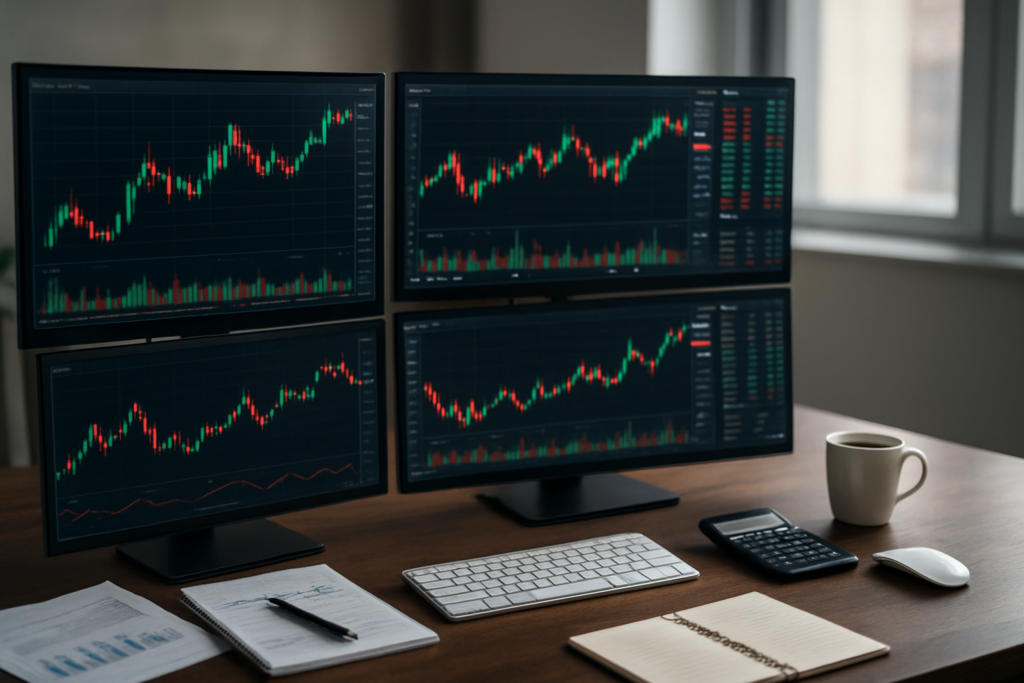
Defining trading signals and how they guide investment decisions
Trading signals act as your compass in the chaotic world of financial markets. Think of them as alerts that tell you when specific market conditions align for potential trading opportunities. These signals come from analyzing price movements, volume patterns, technical indicators, or fundamental data points that suggest whether to buy, sell, or hold an asset.
The beauty of trading signals lies in their ability to remove emotional decision-making from your investment process. Instead of relying on gut feelings or market rumors, you follow data-driven insights that point toward statistically favorable outcomes. For example, when a stock breaks above its 50-day moving average with increased volume, that combination creates a bullish signal suggesting upward momentum.
Professional traders rely on multiple signal confirmations before executing trades. A single indicator might flash buy, but experienced investors wait for two or three signals to align. This approach filters out false positives and increases the probability of successful trades.
Key differences between manual and automated signal generation
Manual signal generation involves human analysis and interpretation of market data. Traders study charts, analyze economic reports, and use their experience to identify potential opportunities. This approach offers flexibility and allows for nuanced decision-making that considers market context and current events.
| Manual Signals | Automated Signals |
|---|---|
| Human interpretation required | Computer-generated alerts |
| Considers market sentiment | Purely data-driven |
| Slower execution | Instant notifications |
| Subject to emotional bias | Emotion-free analysis |
| Adaptable to unique situations | Consistent rule-based approach |
Automated systems scan thousands of securities simultaneously, identifying patterns and generating alerts based on predetermined criteria. These systems never sleep, never get tired, and never let emotions cloud their judgment. They excel at processing vast amounts of data quickly and catching opportunities human traders might miss.
However, automated signals lack the human touch needed to interpret unusual market conditions or breaking news that could invalidate technical patterns. The best traders often combine both approaches, using automated systems for initial screening while applying manual analysis for final decisions.
Why timing matters more than perfect market predictions
Markets don’t reward crystal ball accuracy – they reward good timing. You can be right about a stock’s direction but still lose money if your entry and exit timing is off. A stock might eventually reach your target price, but not before dropping 30% first, potentially stopping you out of your position.
Successful traders focus on probability-based decisions rather than trying to predict exact price movements. They understand that being right 60% of the time with proper risk management beats being right 80% of the time with poor timing and excessive risk-taking.
Consider this scenario: Stock XYZ trades at $100, and your analysis suggests it will reach $120. If you buy immediately and it drops to $90 before rallying, you might panic and sell at a loss. However, if you wait for a signal confirming upward momentum – perhaps a break above $102 with volume – you enter with better odds and less downside risk.
Timing also applies to market cycles and economic conditions. Even the best companies can underperform during bear markets or sector rotations. Recognizing when to step aside or adjust position sizes based on broader market conditions often matters more than individual stock selection.
Common misconceptions that lead to trading losses
One dangerous myth suggests that expensive or complex signals guarantee better results. New traders often chase premium services or sophisticated algorithms, believing higher costs equal higher returns. Reality shows that simple, well-executed strategies often outperform complicated systems that generate conflicting signals.
Another widespread misconception involves signal frequency. Many traders think more signals mean more opportunities and higher profits. This leads to overtrading, where transaction costs and poor-quality setups erode returns. Quality beats quantity every time – waiting for high-probability signals yields better results than acting on every minor market fluctuation.
The “set it and forget it” mentality also traps many traders. They assume signals work independently without considering market context, position sizing, or risk management. Signals are tools, not complete trading strategies. They need proper implementation within a broader framework that includes stop losses, profit targets, and portfolio management rules.
Finally, traders often misunderstand signal accuracy expectations. No signal system wins 100% of the time, and even 70% accuracy is excellent. The key lies in ensuring winning trades generate larger profits than losing trades create losses, creating positive expected value over time despite individual failures.
Essential Types of Trading Signals for Maximum Returns
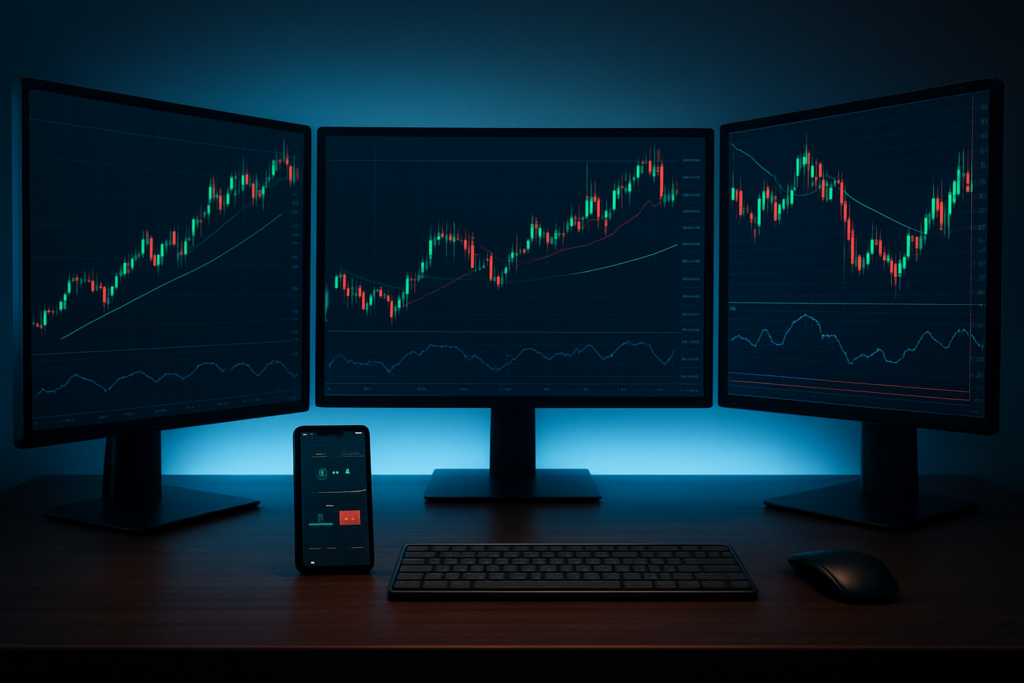
Technical Analysis Signals That Consistently Outperform
Moving averages stand as the foundation of reliable technical signals, with the 50-day and 200-day crossovers generating some of the most profitable entry and exit points. When the 50-day moving average crosses above the 200-day, it creates what traders call a “golden cross” – a bullish signal that often precedes significant upward moves. The opposite scenario, known as a “death cross,” warns of potential downturns.
RSI divergences offer another powerful tool for spotting trend reversals before they happen. When price makes new highs but RSI fails to follow, bearish divergence suggests weakness in the uptrend. Smart traders watch for RSI readings below 30 for oversold conditions and above 70 for overbought scenarios, though the most profitable signals often come from divergence patterns rather than absolute levels.
Support and resistance breakouts with strong volume confirmation deliver exceptional risk-to-reward ratios. A stock breaking above a key resistance level on twice the average volume typically continues its move, making these signals particularly valuable for swing traders. The key lies in waiting for the breakout to occur rather than trying to anticipate it.
Fundamental Analysis Indicators for Long-Term Gains
Earnings growth consistency trumps flashy quarterly beats when building long-term wealth. Companies showing steady earnings growth over multiple years, even if modest, often outperform those with erratic but occasionally spectacular results. The magic number many professional investors look for is 15-20% annual earnings growth sustained over at least three years.
Price-to-earnings ratios relative to growth rates (PEG ratios) reveal undervalued opportunities that others miss. A PEG ratio below 1.0 suggests a stock trades at a discount to its growth rate, while ratios above 2.0 often signal overvaluation. This metric works particularly well in growth sectors where traditional P/E ratios might seem elevated.
Cash flow strength provides the clearest picture of a company’s financial health. Free cash flow growing faster than earnings indicates strong business fundamentals and often precedes stock price appreciation. Companies generating consistent free cash flow can weather economic storms and invest in growth opportunities that drive future returns.
Market Sentiment Signals and Crowd Psychology Patterns
Fear and greed indicators offer contrarian signals that sophisticated investors use to time market entries and exits. When the VIX (volatility index) spikes above 30, it often marks excellent buying opportunities as fear reaches extremes. Conversely, VIX readings below 15 suggest complacency and potential market tops.
Options put/call ratios reveal what institutional money is really thinking. When the ratio climbs above 1.2, it indicates heavy put buying and extreme pessimism – often the best time to buy. Ratios below 0.8 show excessive optimism and call for caution. Professional traders use this data to position themselves opposite to the crowd’s emotions.
Social media sentiment analysis has become increasingly valuable, especially for individual stocks. Platforms tracking Twitter mentions, Reddit discussions, and news sentiment provide early warning signals for both positive and negative moves. The key is identifying when sentiment reaches extreme levels rather than following the crowd.
Volume-Based Signals That Reveal Institutional Movements
Volume precedes price in most significant market moves. When stocks show unusual volume spikes without corresponding news, it often indicates institutional accumulation or distribution. A stock trading three times its average volume deserves immediate attention, as smart money rarely shows its hand accidentally.
On-balance volume (OBV) trends reveal the true direction of institutional money flow. When OBV rises while price remains flat or declines, it suggests accumulation by informed investors. This divergence often precedes substantial price moves, giving retail traders a chance to follow institutional footsteps.
Dark pool trading data provides insights into large block transactions that institutions prefer to hide. Sudden increases in dark pool activity, especially when combined with tight bid-ask spreads, often signal major position building that will eventually impact stock prices.
Combining Multiple Signal Types for Higher Accuracy
The most successful traders never rely on single signals but instead create confluence zones where multiple indicators align. A technical breakout supported by strong fundamentals and positive sentiment creates the highest probability trades. This layered approach dramatically improves success rates while reducing false signals.
Signal weighting based on timeframes adds another dimension to accuracy. Long-term fundamental signals carry more weight for position sizing, while short-term technical signals determine precise entry and exit timing. This hierarchy prevents traders from making major decisions based on minor technical fluctuations.
Risk management rules become even more critical when combining signals. Each signal type should have specific stop-loss levels and position sizing rules. Technical signals might warrant tighter stops, while fundamental positions can tolerate more volatility. The key is maintaining consistent rules regardless of how many signals align, preventing overconfidence from leading to oversized positions.
Proven Investment Strategies for Sustainable Wealth Building
Technical Analysis Signals That Consistently Outperform
Moving averages stand as the foundation of reliable technical signals, with the 50-day and 200-day crossovers generating some of the most profitable entry and exit points. When the 50-day moving average crosses above the 200-day, it creates what traders call a “golden cross” – a bullish signal that often precedes significant upward moves. The opposite scenario, known as a “death cross,” warns of potential downturns.
RSI divergences offer another powerful tool for spotting trend reversals before they happen. When price makes new highs but RSI fails to follow, bearish divergence suggests weakness in the uptrend. Smart traders watch for RSI readings below 30 for oversold conditions and above 70 for overbought scenarios, though the most profitable signals often come from divergence patterns rather than absolute levels.
Support and resistance breakouts with strong volume confirmation deliver exceptional risk-to-reward ratios. A stock breaking above a key resistance level on twice the average volume typically continues its move, making these signals particularly valuable for swing traders. The key lies in waiting for the breakout to occur rather than trying to anticipate it.
Fundamental Analysis Indicators for Long-Term Gains
Earnings growth consistency trumps flashy quarterly beats when building long-term wealth. Companies showing steady earnings growth over multiple years, even if modest, often outperform those with erratic but occasionally spectacular results. The magic number many professional investors look for is 15-20% annual earnings growth sustained over at least three years.
Price-to-earnings ratios relative to growth rates (PEG ratios) reveal undervalued opportunities that others miss. A PEG ratio below 1.0 suggests a stock trades at a discount to its growth rate, while ratios above 2.0 often signal overvaluation. This metric works particularly well in growth sectors where traditional P/E ratios might seem elevated.
Cash flow strength provides the clearest picture of a company’s financial health. Free cash flow growing faster than earnings indicates strong business fundamentals and often precedes stock price appreciation. Companies generating consistent free cash flow can weather economic storms and invest in growth opportunities that drive future returns.
Market Sentiment Signals and Crowd Psychology Patterns
Fear and greed indicators offer contrarian signals that sophisticated investors use to time market entries and exits. When the VIX (volatility index) spikes above 30, it often marks excellent buying opportunities as fear reaches extremes. Conversely, VIX readings below 15 suggest complacency and potential market tops.
Options put/call ratios reveal what institutional money is really thinking. When the ratio climbs above 1.2, it indicates heavy put buying and extreme pessimism – often the best time to buy. Ratios below 0.8 show excessive optimism and call for caution. Professional traders use this data to position themselves opposite to the crowd’s emotions.
Social media sentiment analysis has become increasingly valuable, especially for individual stocks. Platforms tracking Twitter mentions, Reddit discussions, and news sentiment provide early warning signals for both positive and negative moves. The key is identifying when sentiment reaches extreme levels rather than following the crowd.
Volume-Based Signals That Reveal Institutional Movements
Volume precedes price in most significant market moves. When stocks show unusual volume spikes without corresponding news, it often indicates institutional accumulation or distribution. A stock trading three times its average volume deserves immediate attention, as smart money rarely shows its hand accidentally.
On-balance volume (OBV) trends reveal the true direction of institutional money flow. When OBV rises while price remains flat or declines, it suggests accumulation by informed investors. This divergence often precedes substantial price moves, giving retail traders a chance to follow institutional footsteps.
Dark pool trading data provides insights into large block transactions that institutions prefer to hide. Sudden increases in dark pool activity, especially when combined with tight bid-ask spreads, often signal major position building that will eventually impact stock prices.
Combining Multiple Signal Types for Higher Accuracy
The most successful traders never rely on single signals but instead create confluence zones where multiple indicators align. A technical breakout supported by strong fundamentals and positive sentiment creates the highest probability trades. This layered approach dramatically improves success rates while reducing false signals.
Signal weighting based on timeframes adds another dimension to accuracy. Long-term fundamental signals carry more weight for position sizing, while short-term technical signals determine precise entry and exit timing. This hierarchy prevents traders from making major decisions based on minor technical fluctuations.
Risk management rules become even more critical when combining signals. Each signal type should have specific stop-loss levels and position sizing rules. Technical signals might warrant tighter stops, while fundamental positions can tolerate more volatility. The key is maintaining consistent rules regardless of how many signals align, preventing overconfidence from leading to oversized positions.
Proven Investment Strategies for Sustainable Wealth Building

Risk Management Techniques That Protect Your Capital
Capital preservation should be your top priority as an investor. The 2% rule remains one of the most effective techniques for protecting your account. Never risk more than 2% of your total trading capital on any single trade. This means if you have $10,000 in your account, your maximum loss per trade should be $200.
Stop-loss orders serve as your safety net. Place them at levels that align with your risk tolerance and technical analysis. A trailing stop can be particularly useful, moving your stop-loss order higher as the stock price increases, locking in profits while maintaining downside protection.
The risk-reward ratio calculation helps you evaluate whether a trade is worth taking. Aim for a minimum 1:2 ratio, where your potential profit is at least twice your potential loss. For example, if you’re willing to lose $100 on a trade, your target profit should be $200 or more.
Diversification across asset classes reduces portfolio volatility. Don’t put all your money into tech stocks or cryptocurrency. Spread your investments across different sectors, geographic regions, and asset types including stocks, bonds, commodities, and real estate investment trusts (REITs).
Position Sizing Methods That Maximize Profit Potential
The Kelly Criterion provides a mathematical approach to position sizing based on your win rate and average win-loss ratio. The formula is: f = (bp – q) / b, where f is the fraction of capital to wager, b is the odds received, p is the probability of winning, and q is the probability of losing.
Fixed dollar amount sizing keeps things simple. You invest the same dollar amount in each position regardless of the stock price. This method works well for beginners who want consistent exposure across their portfolio.
Percentage-based sizing allocates a fixed percentage of your total portfolio to each position. Many successful traders use 5-10% per position for growth stocks and up to 20% for blue-chip dividend stocks they plan to hold long-term.
Volatility-adjusted position sizing considers the stock’s price movements. High-volatility stocks get smaller position sizes to account for their unpredictable nature, while stable stocks can receive larger allocations.
Diversification Strategies Across Markets and Timeframes
Geographic diversification protects against country-specific risks. Consider international ETFs or ADRs (American Depositary Receipts) to gain exposure to European, Asian, and emerging markets. The Vanguard Total International Stock ETF (VTIAX) provides broad international exposure with low fees.
Sector diversification prevents concentration risk. Balance growth sectors like technology with defensive sectors like utilities and consumer staples. Healthcare, financial services, and energy sectors often move independently, providing natural hedging.
| Asset Class | Allocation Range | Purpose |
|---|---|---|
| Domestic Stocks | 40-60% | Growth and dividends |
| International Stocks | 20-30% | Geographic diversification |
| Bonds | 10-30% | Stability and income |
| REITs | 5-10% | Real estate exposure |
| Commodities | 5-10% | Inflation hedge |
Time horizon diversification means holding investments with different maturity dates. Mix short-term trades (days to weeks), swing trades (weeks to months), and long-term investments (years to decades). This approach smooths out market volatility and provides multiple opportunities for profit.
Alternative investments like cryptocurrency, precious metals, and private equity can provide additional diversification benefits, though they should represent a smaller portion of your overall portfolio due to their higher risk profiles.
Dollar-Cost Averaging for Volatile Market Conditions
Dollar-cost averaging (DCA) removes the guesswork from market timing. Instead of trying to predict market bottoms, you invest a fixed amount at regular intervals regardless of market conditions. This strategy automatically buys more shares when prices are low and fewer shares when prices are high.
Monthly DCA works well for most investors. Set up automatic investments of $500, $1,000, or whatever amount fits your budget into broad market index funds or individual stocks you believe in long-term. The S&P 500 has historically rewarded patient DCA investors over 10+ year periods.
Market crash opportunities present the best DCA scenarios. During the 2008 financial crisis and March 2020 pandemic selloff, investors who continued their DCA programs saw exceptional returns as markets recovered. Fear often creates the best buying opportunities.
Value averaging takes DCA one step further by adjusting your investment amount based on portfolio performance. If your investments are up significantly, you invest less. If they’re down, you invest more. This method can potentially generate higher returns than traditional DCA but requires more active management.
Target-date funds automatically implement DCA principles while adjusting asset allocation based on your age and retirement timeline. These funds become more conservative as you approach retirement, reducing risk when you can least afford losses.
Cryptocurrency DCA has gained popularity among younger investors. Bitcoin and Ethereum’s extreme volatility makes them ideal candidates for dollar-cost averaging, though crypto should represent only a small percentage of your total investment portfolio due to regulatory and technological risks.
Technology Tools That Enhance Trading Signal Accuracy
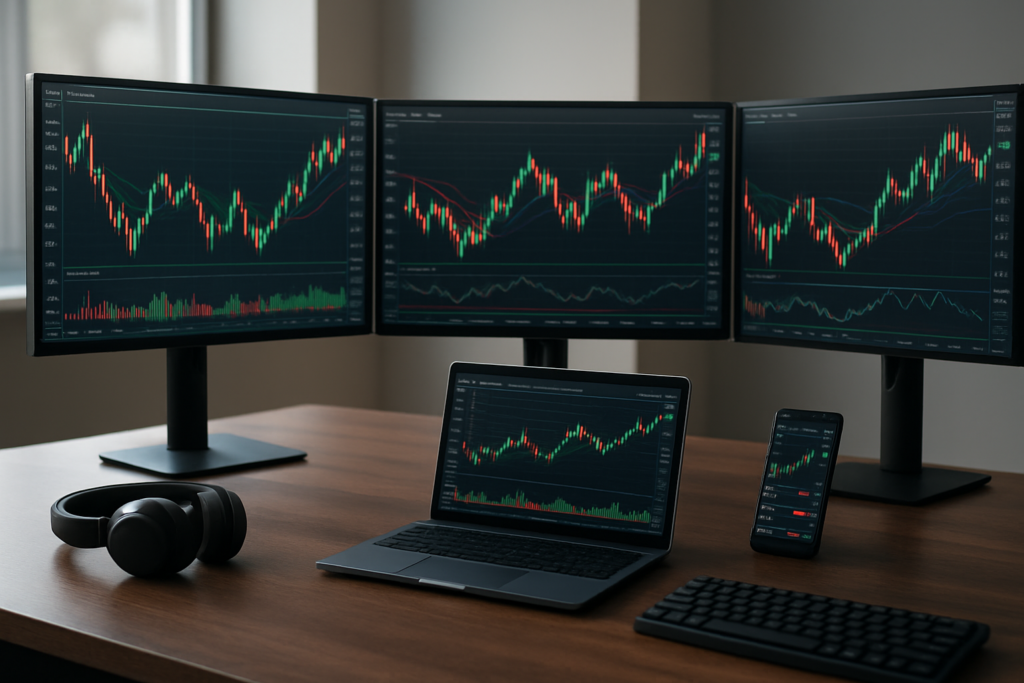
Top-rated signal providers and their success rates
Professional signal providers have transformed how individual traders access market insights. TradingView stands out with over 50 million active users and consistently ranks among the most reliable platforms, offering signals from verified traders with publicly tracked performance records. Many top-tier providers maintain success rates between 65-75%, though these numbers require careful scrutiny.
MetaTrader’s Signal service connects traders directly to professional money managers, with transparent statistics showing real-time performance. The platform displays detailed metrics including profit factors, drawdown percentages, and win rates for each signal provider. Premium services like ZuluTrade and eToro’s CopyTrader feature allow you to automatically mirror successful traders’ positions while maintaining full transparency about their historical performance.
When evaluating providers, focus on risk-adjusted returns rather than just profit percentages. A provider showing 80% wins with massive drawdowns poses greater risk than one with 60% accuracy and consistent small gains. Look for providers with at least 12 months of verified track records and realistic return expectations.
Mobile apps that deliver real-time market alerts
Speed determines profitability in today’s markets, making mobile alerts essential for active traders. TradingView’s mobile app delivers push notifications within milliseconds of signal generation, complete with customizable alert conditions based on technical indicators, price levels, or volume spikes.
The Investing.com app provides comprehensive market alerts across stocks, forex, commodities, and cryptocurrencies. Users can set price alerts, news-based triggers, and economic calendar notifications. The app’s strength lies in its economic calendar integration, sending alerts 15 minutes before major announcements that typically move markets.
For forex traders, the MetaTrader 4 and 5 mobile apps remain industry standards, offering real-time quotes, customizable alerts, and one-click trading execution. These apps sync seamlessly with desktop platforms, ensuring signal continuity across devices.
Specialized apps like StockTwits combine social sentiment with technical alerts, providing context around market movements. The app aggregates trader discussions and correlates them with price action, offering unique insights into market psychology alongside traditional technical signals.
Automated trading platforms for consistent execution
Automated execution removes emotional decision-making from trading while ensuring signals get acted upon immediately. MetaTrader’s Expert Advisors (EAs) allow traders to code custom strategies or purchase pre-built systems that execute trades based on specific signal criteria.
TradingView’s Pine Script enables traders to create custom indicators and automated strategies directly within the platform. The backtesting environment lets you validate strategies before deploying capital, while the broker integration feature executes trades across multiple supported brokers simultaneously.
Interactive Brokers’ TWS platform offers sophisticated automation tools through its API, supporting multiple programming languages including Python and Java. The platform’s algorithms can handle complex multi-leg strategies and risk management protocols automatically.
NinjaTrader specializes in futures and forex automation, providing advanced order management and position sizing algorithms. The platform’s Strategy Builder allows non-programmers to create automated systems using drag-and-drop functionality, while still offering full coding capabilities for advanced users.
Backtesting software to validate signal performance
Reliable backtesting prevents costly mistakes by revealing how strategies would have performed historically. QuantConnect provides cloud-based backtesting with access to multiple asset classes and over 20 years of historical data. The platform supports Python and C#, offering institutional-grade backtesting capabilities for retail traders.
Amibroker remains popular among professional traders for its speed and flexibility. The software handles millions of bars of data efficiently while providing detailed performance metrics including maximum drawdown, Sharpe ratios, and Monte Carlo analysis for robust strategy validation.
TradingView’s built-in backtesting shows strategy performance directly on charts, making it easy to visualize how signals would have performed during different market conditions. The platform automatically calculates key metrics and provides detailed trade lists for analysis.
For options strategies, OptionVue offers specialized backtesting that accounts for Greeks, implied volatility changes, and time decay. The software models complex multi-leg strategies with precision, showing how positions would have performed under various market scenarios.
Remember that backtesting results don’t guarantee future performance, but they provide valuable insights into strategy robustness and help identify potential weaknesses before risking real capital.
Building Your Personal Trading System for Long-Term Success

Creating a disciplined approach to signal evaluation
The difference between successful traders and those who struggle often comes down to how they evaluate trading signals. Developing a systematic approach prevents you from jumping on every signal that crosses your path. Start by establishing clear criteria for what makes a signal worth considering. Look at factors like the signal’s historical accuracy, the market conditions when it performs best, and how it aligns with your trading style.
Create a simple scoring system for signals. Rate each potential trade on factors like trend strength, volume confirmation, and risk-to-reward ratio. Signals scoring below your threshold get ignored, no matter how tempting they might seem. This removes emotion from the decision-making process and keeps you focused on high-probability opportunities.
Consider the source of your signals carefully. Free signals from social media often lack the research behind paid services or signals you generate yourself. Track the performance of different signal providers over time. Many traders keep a signal journal, noting not just wins and losses but also market conditions and why certain signals worked or failed.
Setting realistic profit targets and stop-loss levels
Your profit targets and stop-loss levels form the foundation of risk management. Setting unrealistic profit targets leads to holding winning positions too long, watching profits evaporate when markets reverse. Meanwhile, stop-losses placed too tight get triggered by normal market noise, cutting promising trades short.
A good rule of thumb is targeting profits at least twice your potential loss. If you’re willing to risk $100 on a trade, aim for $200 in profit. This 2:1 reward-to-risk ratio means you can be wrong 40% of the time and still make money overall. Adjust these ratios based on your trading timeframe and market volatility.
Place stop-losses based on technical levels rather than arbitrary percentages. Support and resistance levels, moving averages, and trend lines provide logical exit points. These levels represent where your trading thesis breaks down, making them natural places to cut losses.
Review and adjust your targets regularly. What works in trending markets might fail in sideways markets. Volatile periods might require wider stops, while calm markets might allow tighter risk management.
Developing emotional control during market volatility
Market volatility tests every trader’s emotional discipline. Fear and greed drive most trading mistakes, turning profitable strategies into losing ones. Building emotional control starts with accepting that losses are part of trading. Every professional trader loses money on individual trades – the key is keeping those losses small and manageable.
Develop pre-planned responses to different market scenarios. If your trade moves against you, you’ll already know exactly when to exit. If it moves in your favor, you’ll have predetermined profit-taking levels. This planning removes emotional decision-making during stressful moments.
Practice meditation or other stress-reduction techniques. Trading while stressed leads to poor decisions. Take regular breaks from watching charts, especially during losing streaks. Sometimes stepping away for a day or two helps reset your emotional state.
Keep a trading journal that includes your emotional state during each trade. Note when you felt confident, fearful, or greedy. Over time, you’ll recognize patterns and can work to address emotional triggers before they impact your trading.
Tracking and analyzing your trading performance metrics
Most traders focus solely on profit and loss, missing valuable insights from detailed performance tracking. Start with basic metrics: win rate, average win size, average loss size, and maximum drawdown. These numbers reveal whether your strategy actually works and where improvements are needed.
Track your performance across different market conditions. Your strategy might work great during trending markets but struggle when markets move sideways. Understanding these patterns helps you adjust position sizes or take breaks during unfavorable conditions.
| Metric | Target Range | What It Reveals |
|---|---|---|
| Win Rate | 40-60% | Signal accuracy |
| Risk/Reward Ratio | 1:2 or better | Trade quality |
| Maximum Drawdown | <20% | Risk management |
| Profit Factor | >1.5 | Overall profitability |
Monthly performance reviews help identify improvement areas. Look beyond just profits – examine which types of trades work best, optimal position sizes, and time-of-day patterns. Many traders discover they perform better during certain market hours or avoid trading on specific days.
Scaling your investments as your confidence grows
Growing your trading account requires a careful balance between aggressive growth and capital preservation. Start small while learning and gradually increase position sizes as your skills improve. Many successful traders begin risking just 1% of their account per trade, increasing to 2-3% only after proving consistent profitability.
Scaling isn’t just about position size – consider expanding to additional markets or timeframes once you master your initial approach. A trader successful with daily signals might explore weekly signals or different asset classes. This diversification reduces dependency on any single strategy or market.
Set specific milestones for scaling decisions. Double your account? Consider increasing position sizes by 50%. Achieve six consecutive profitable months? Maybe explore that new market you’ve been researching. Having predetermined scaling rules prevents overconfidence from driving poor decisions during hot streaks.
Remember that larger positions come with increased psychological pressure. The same $500 loss hits differently when it represents 5% of your account versus 1%. Practice proper risk management as you scale, ensuring you can handle both the financial and emotional aspects of larger trades.

Getting consistent profits from trading isn’t about finding that one magic signal or secret strategy. The most successful traders understand that combining reliable technical and fundamental signals, backed by solid risk management, creates the foundation for sustainable returns. When you pair proven investment strategies like diversification and dollar-cost averaging with modern technology tools and real-time market data, you’re setting yourself up for long-term wealth building rather than quick wins that disappear just as fast.
The real game-changer comes when you develop your own personalized trading system that fits your risk tolerance, schedule, and financial goals. Start small, test your strategies with paper trading first, and always remember that even the best signals fail sometimes. Focus on building a system you can stick with through both winning and losing streaks, and don’t let emotions drive your decisions. Your future self will thank you for taking the disciplined approach to trading and investing.